
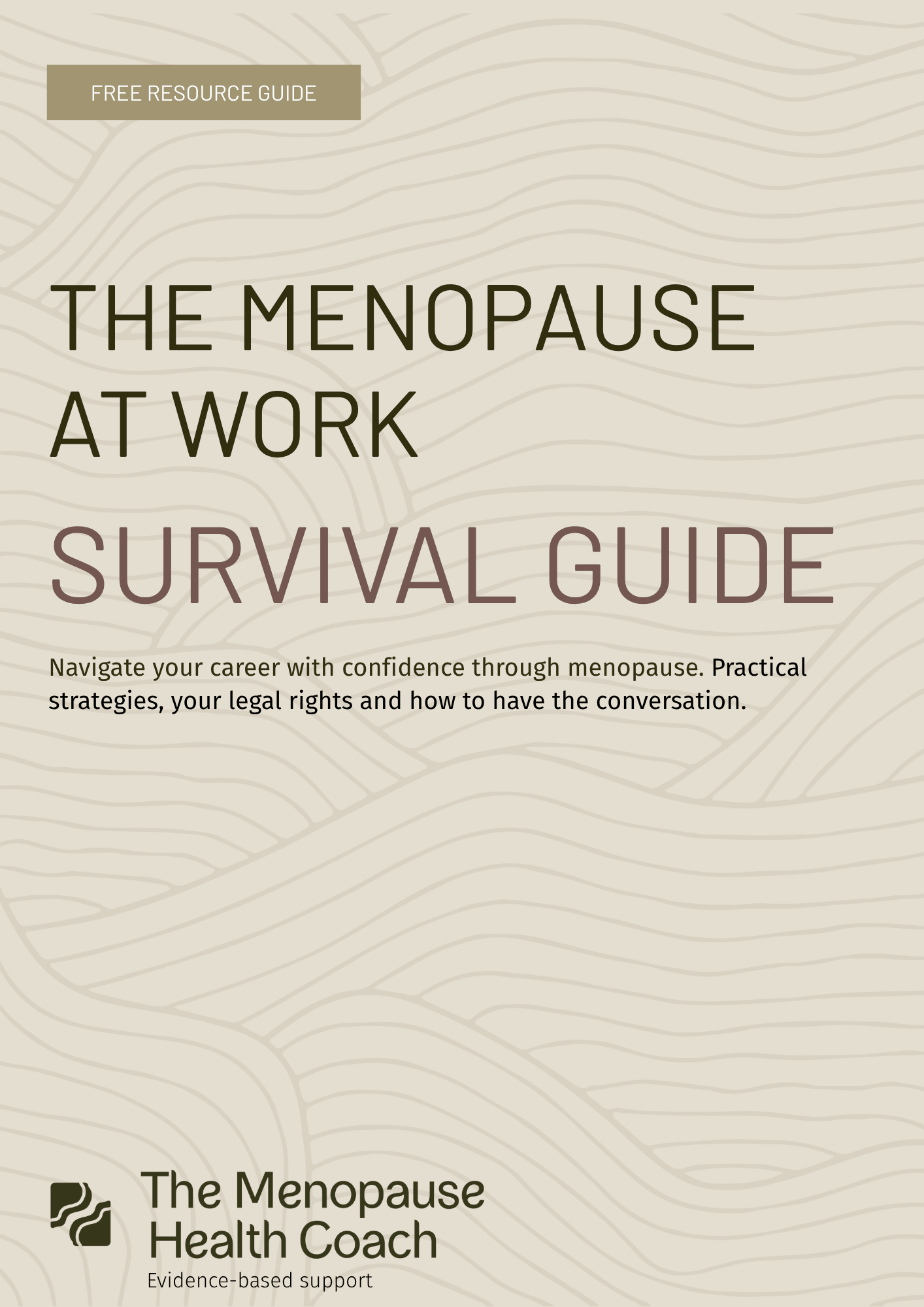
Menopause at Work:
Navigate Your Career with Confidence
Brain fog, fatigue, anxiety, hot flushes - and still needing to show up, perform and be taken seriously. This guide covers practical symptom strategies, your legal rights and how to ask for the support you're entitled to.
Even if coaching isn't right for you, you'll leave with clarity.
The Menopause Action Gap™
Understanding what's happening doesn't automatically tell you how to manage it at work.
You might read about brain fog strategies, energy management, and workplace adjustments. But implementing all of that while managing your workload, your relationships with colleagues and your career progression - that's where most women get stuck.
How menopause affects work performance
-
Brain fog
Difficulty concentrating, memory lapses, and slower processing make complex tasks, meetings and decisions harder.
-
Fatigue
Exhaustion makes it difficult to maintain energy and focus throughout the day, particularly in afternoon meetings.
-
Hot flushes
Sudden heat and visible flushing can feel embarrassing and distracting, particularly during meetings or presentations.
-
Anxiety & mood
Increased anxiety reduces confidence and makes workplace stress harder to handle. Irritability can affect relationships with colleagues.
Free Resource Guide - Menopause at Work Survival Guide
What’s Inside the Survival Guide?
Symptom Managagment: Immediate and long-term strategies.
Your Legal Rights: An overview of UK law and the reasonable adjustments.
The Manager Conversation: Sample scripts and strategic tips.
Confidence Builders: Techniques to counter anxiety.
Trying to manage menopause symptoms while holding everything together at work can feel exhausting.
Brain fog, anxiety, poor sleep, low confidence, hot flushes and overwhelm can quietly affect performance, concentration and wellbeing - yet many women feel unable to talk about what they’re experiencing.
This free practical guide will help you better understand the impact menopause can have in the workplace and provide realistic strategies to help you feel more supported, confident and in control.
Inside, you'll discover:
• Common menopause symptoms that can affect work performance
• Practical ways to support your energy, focus and wellbeing at work
• How to start conversations with managers or HR if needed
• Simple workplace adjustments that can make a real difference
• How to advocate for yourself without guilt or embarrassment
You should not have to struggle through menopause unsupported at work.
Download your free survival guide today.


Brain fog at work
Managing cognitive changes in your working day
Oestrogen supports memory, focus, and processing speed. As it declines, many women experience difficulty concentrating, memory lapses and slower processing - all while expected to perform at their best.
What you can do
Prioritise sleep: cognitive function depends on sleep quality more than almost anything else
Stabilise blood sugar: eat protein with every meal - blood sugar crashes worsen brain fog directly
Reduce cognitive load: use systems, checklists, and project management tools to compensate for memory changes
Take strategic breaks: even 5 minutes of movement or fresh air makes a measurable difference

Fatigue at work
Energy management when you're running on empty
Menopause fatigue is driven by poor sleep, hormonal changes, and often years of over-functioning. It's real and it's not laziness. Your body is signalling that something needs to shift.
What you can do
Move strategically: a 10-minute walk or stretch can boost energy for hours - make this part of your working day
Manage your workload: what can you delegate, simplify, or defer? You may be carrying more than is sustainable
Eat regular meals with protein, healthy fats, and complex carbs - blood sugar crashes cause energy crashes
Communicate your needs: your manager may be able to adjust your schedule or workload temporarily

Hot flushes & anxiety at work
Staying composed when your body has other plans
Hot flushes
Dress in layers you can remove; keep breathable fabrics close to skin
Keep your desk cool with a small fan; avoid caffeine and alcohol on high-stakes days
If you flush in a meeting: it's temporary, it will pass, most people won't notice
Anxiety and confidence
Prepare thoroughly for presentations or important meetings -preparation reduces anxiety more than anything else
Use breathing techniques before high-stakes moments to activate your parasympathetic nervous system
Challenge catastrophic thinking: notice worst-case scenarios and gently redirect
Menopause vs burnout
Understanding what you're actually dealing with
-
Menopause symptoms
Driven by hormonal changes
Include physical symptoms (flushes, sweats, joint pain)
Alongside cognitive and emotional changes
-
Burnout
Driven by chronic workplace stress
Characterised by emotional exhaustion and cynicism
Reduced effectiveness and motivation
Menopause can intensify burnout, and burnout can intensify menopause symptoms. They feed each other = and both need to be addressed. Is it menopause - or am I just not coping at work anymore?
Talking to your manager
How to have the conversation - without undermining yourself
Most managers want to support their team. They just need to understand what's happening and what you need. Keep it factual, focus on solutions and be clear about what would help.
Opening
"I wanted to let you know that I'm managing some menopause symptoms that may temporarily affect my performance. I'm taking steps to manage them, and I wanted to discuss whether there are any adjustments that might help me continue performing well."
Closing
"I'm committed to continuing to perform well in my role. I wanted to be transparent about what's happening so we can work together to find solutions."
Workplace adjustments
What you can ask for - and what may be available to you
-
Flexible working
Later starts or earlier finishes
Working from home
Compressed hours
Flexible break times
-
Environmental
Fan or cooler workspace
Temperature control access
Quiet space for breaks
Proximity to ventilation
-
Workload
Temporary load reduction
Flexible meeting times
Short breaks as needed
Medical appointment flexibility
Your legal rights in the UK
What the law says about menopause at work
-
If menopause substantially limits day-to-day activities, you may be protected under disability discrimination law.
-
If menopause is treated differently from other health conditions, it may constitute sex discrimination.
-
Employers have a duty to protect employee health - which includes managing menopause-related risks.
-
The Employment Rights Act 2025 introduced new provisions relating to menopause and gender pay gap action plans.
From April 2026, employers with 250 or more employees can voluntarily publish an action plan alongside their gender pay gap data, setting out steps they are taking to support employees experiencing menopause and address gender equality. Subject to legislation, these action plans are expected to become mandatory for employers with 250 or more employees in 2027
If you're being treated unfairly: document everything, use your employer's grievance procedure and contact ACAS for free advice before considering a tribunal claim.
Your career confidence
You're not losing your competence. You're managing a transition.
Your skills, experience, and value haven't changed. What's changed is your body's needs. Many women find that once they understand menopause and get the right support, they not only maintain their career performance - they become more strategic, more selective about what they take on, and more confident in advocating for what they need.
Your work symptoms rarely exist in isolation
Brain fog, fatigue, anxiety, sleep disruption and hot flushes can all affect how you feel and function at work - and they often overlap rather than appearing as separate problems.
If you're noticing several changes at once, it can help to step back from the workplace impact and understand the wider menopause picture first. Explore the complete guide to menopause symptoms to understand how the physical, cognitive, emotional and metabolic changes of menopause can connect.
The MHC Method™
Closing the Menopause Action Gap™
A structured, evidence-informed approach that addresses sleep, blood sugar, nervous system load and hormonal shifts - simultaneously, not in isolation.
-
1
Connect what’s happening in your body
-
2
Stabilise the systems driving symptoms
-
3
Apply sustainable changes that fit real life
You don't have to choose between your health and your career.
Book a free 30-minute Menopause Clarity Call. We'll discuss what's affecting your work performance, what adjustments might help, and create a personalised strategy using the MHC Method™.
Even if we decide coaching isn't right for you, you'll leave with clarity.
Frequently Asked Questions About Menopause at Work
These are some of the questions I hear most often from women trying to manage menopause alongside their working life.
-
Yes. Symptoms such as brain fog, fatigue, anxiety and sleep disruption can affect concentration, memory, energy and stress tolerance, which may affect how work feels and how you perform.
-
Yes. Cognitive symptoms including difficulties with concentration, memory and word-finding are commonly reported during the menopause transition and can affect working life.
-
Menopause can be associated with increased anxiety, while sleep disruption, stress and workplace pressures can also contribute. Persistent or severe anxiety or panic symptoms should be discussed with an appropriate healthcare professional.
-
There is no automatic legal entitlement to menopause-specific adjustments simply because someone is experiencing menopause. However, depending on the circumstances and the impact of symptoms, protections under equality and health and safety law may apply. Employers can also provide workplace adjustments and support as part of good workplace practice.
-
Depending on individual needs, adjustments can include flexible working arrangements, changes to the working environment, temperature and ventilation controls, access to breaks or a private rest area, and changes to workload or ways of working.
-
No. Disclosure is a personal choice. However, talking to your employer or manager may make it easier to explain what you are experiencing and discuss appropriate workplace support.
-
They can overlap, and the symptoms can look similar. Menopause involves hormonal changes, while burnout is associated with prolonged or excessive workplace or other stress. It is possible for both to contribute to fatigue, low mood and cognitive difficulties.
-
Yes. Symptoms such as brain fog, fatigue, anxiety and sleep disruption can affect confidence, even when a woman's skills, experience and capability have not changed.
-
Menopause itself is not a protected characteristic under the Equality Act 2010. Depending on the circumstances, menopause-related difficulties may engage legal protections relating to disability, sex or age discrimination. Employers also have health and safety responsibilities, and the specific legal position depends on the individual's circumstances.