Waking at 3am and struggling to get back to sleep? You're not alone.
You wake in the middle of the night. Your mind starts racing, you become increasingly aware of the time and before you know it, you're worrying about how exhausted you'll feel tomorrow.
Sound familiar?
Sleep disruption is common during perimenopause and menopause. Hormonal changes, night sweats, stress, changes in mood and other health factors can all contribute to interrupted sleep.
And when it keeps happening, the impact on your energy, concentration and everyday wellbeing can be exhausting.
The FREE 3AM Wake-Up Survival Guide from The Menopause Health Coach gives you practical, evidence-informed strategies to help you manage those frustrating middle-of-the-night wake-ups, feel calmer and create better conditions for sleep.
INSIDE THIS FREE GUIDE, YOU'LL DISCOVER:
Understanding the hormone–sleep connection: Explore how changes in oestrogen and progesterone, night sweats, stress and other factors can influence your sleep.
What to do when you're awake at 3am: A simple step-by-step approach to help you stop clock-watching, reduce frustration and know when to get out of bed.
Five calming activities to try: Practical techniques to help settle your mind and body when sleep isn't coming easily.
Understanding the blood sugar connection: Discover how blood glucose regulation works overnight and why waking at 3am doesn't automatically mean your blood sugar has dropped.
Six simple bedtime snack ideas: Explore nourishing options if you're genuinely hungry before bed, without unnecessary food rules or restrictions.
Your 3am emergency toolkit: Gentle breathing, temperature management and simple techniques to help quieten racing thoughts.
Creating a more comfortable sleep environment: Practical ideas for managing room temperature, bedding, lighting and night sweats.
Supporting better sleep during the day: Explore everyday habits around daylight, movement, caffeine, eating patterns and evening routines that may support your sleep.
Your bedroom checklist: Identify small changes that could make your sleeping environment more comfortable.
WHO IS THIS GUIDE FOR?
This guide is for women navigating perimenopause or menopause who find themselves waking during the night, struggling to get back to sleep or feeling increasingly exhausted by disrupted sleep.
Whether you're experiencing night sweats, racing thoughts, difficulty settling or simply finding that your sleep isn't what it used to be, this guide offers a practical place to start.
YOU DON'T HAVE TO SPEND ANOTHER NIGHT STARING AT THE CEILING.
You can't always control when you wake up, but you can learn practical ways to respond, reduce the pressure around sleep and explore what might be contributing to the problem.
Download your FREE guide and keep your 3am toolkit close at hand for the nights when you need it.
This guide is for general educational purposes. It is not a diagnostic tool and cannot identify the cause of night-time waking. Sleep disruption can have several causes. If it is persistent, worsening or affecting your daily life, speak to your doctor or another appropriate healthcare professional.

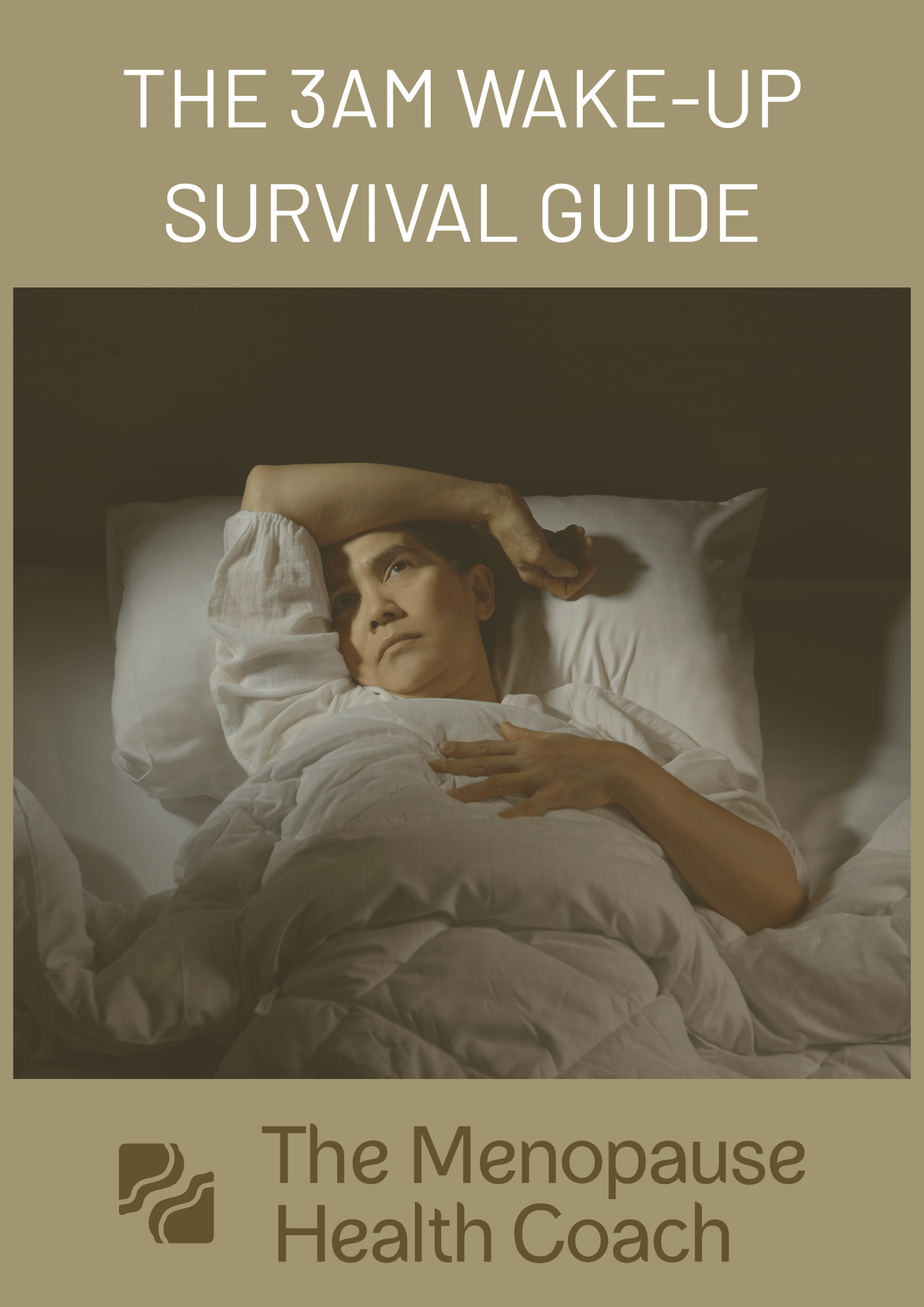 Image 1 of 1