
Itchy Skin in Menopause: Why It Happens at Night and What Helps
It's 2–3 am. You're exhausted, but your skin won't let you sleep.
Perhaps it's an itch that moves from your shoulder to your legs, a crawling sensation that is difficult to describe, or an uncomfortable urge to move your legs just when you're trying to settle.
These sensations can be frustrating, particularly when they keep interrupting your sleep.
Some women notice dry or itchy skin during perimenopause and after menopause. Others experience crawling sensations or symptoms that resemble restless legs syndrome. Menopause-related changes may contribute to some symptoms, but they are not the only possible explanation.
Understanding the difference matters because the most helpful approach depends on what's causing the sensation.
In this blog, we'll look at the differences between itchy skin, crawling sensations and restless legs, what may make them worse at night, and practical steps that may help you sleep more comfortably.
Can Menopause Cause Itchy Skin?
Yes, some women notice new or worsening itching, crawling sensations or restless legs during perimenopause and menopause. It can happen anywhere on the body and may be particularly noticeable at night. But persistent or severe itching can have other causes too, so it's important not to assume every new symptom is caused by menopause.
Why Can Itchy Skin Occur During Menopause?
Dry or itchy skin can occur during and after the menopause transition. Hormonal changes may contribute to changes in skin hydration and structure, but itching can also be caused by dry air, irritation, eczema, allergies, medication reactions and other health conditions.
If you're experiencing persistent itching, it's worth considering the wider picture rather than automatically assuming it's hormonal.
1. Dryness and changes to the skin barrier
Oestrogen plays a role in skin health, including skin thickness, collagen and hydration. Changes associated with ageing and menopause may contribute to dryness or changes in skin texture.
When skin becomes dry, its protective barrier may be less effective, making it more vulnerable to irritation. You may notice itching after bathing, when wearing certain fabrics or during colder months when indoor heating dries the air.
What may help: Use a fragrance-free moisturiser or emollient regularly, take lukewarm rather than hot showers, and choose gentle cleansers. If your skin remains itchy despite these measures, ask a pharmacist or doctor for advice.
2. Crawling sensations: what is formication?
Formication describes a sensation that feels as though insects are crawling across or under the skin, even when nothing is there.
It is a real sensory experience, but it does not have one single cause. Some people report unusual skin sensations during the menopause transition, although the extent to which hormonal changes directly cause formication is not fully established.
Crawling, tingling or burning sensations can also have other causes, including medication effects or nerve-related conditions.
If the sensation is new, persistent, worsening or accompanied by other symptoms, arrange a medical assessment rather than assuming it is a menopause symptom.
3. Irritation and other skin conditions
Skin can become itchy because of eczema, contact dermatitis, allergies, infections or reactions to products. You may develop a rash, redness, swelling, scaling or other visible changes, although not every cause of itching produces an obvious rash.
Consider whether you have recently changed your soap, moisturiser, laundry detergent, medication or clothing. Avoiding a suspected irritant may help, but persistent symptoms should be assessed.
4. Could histamine be involved?
Histamine plays a role in some types of itching, particularly itching associated with allergic reactions. However, it would be too simplistic to attribute menopausal itching generally to histamine or to assume that hormonal changes have caused increased histamine activity.
If you suspect an allergy or find that itching is associated with a particular exposure, a pharmacist or doctor can help you consider appropriate next steps.
Looking at the bigger picture
Itchy skin, crawling sensations and restless legs can occur together, particularly when sleep is already disrupted. However, they are not necessarily caused by the same underlying problem.
If you're experiencing several changes during perimenopause or menopause, you can also explore the full guide to menopause symptoms for a broader overview.
Why Is Itchy Skin Worse at Night?
Itching can feel more intense at night, when you're lying still and trying to fall asleep. Several factors may contribute.
Warmth and sweating
A warm bedroom, heavy bedding or night sweats can make some types of itching more uncomfortable. If heat seems to aggravate your symptoms, try lighter bedding and breathable sleepwear.
Dry skin
Dryness can become particularly noticeable when you're settling down for the night. Indoor heating during colder months may also contribute to dry skin.
Apply a fragrance-free moisturiser regularly, especially after bathing. If your legs are particularly dry, you may find that moisturising them before bed helps.
Fewer distractions
During the day, work and everyday activities can distract you from mild physical sensations. At night, when you're lying quietly, the same sensations may become much more noticeable.
This doesn't mean the itching is imaginary. It means that the sensation can be harder to ignore when you're trying to rest.
What can you try tonight?
Keep your bedroom comfortably cool.
Use a fragrance-free moisturiser or emollient.
Choose loose, breathable sleepwear.
Try a cool, damp cloth on an itchy area.
Pat or gently press the skin instead of scratching it.
Avoid hot showers immediately before bed if they worsen your symptoms.
If itching repeatedly interrupts your sleep, is widespread or severe, or does not improve with self-care, speak to your doctor. A pharmacist can also advise on suitable treatments for some causes of itching.
If waking during the night is becoming a regular problem, our 3AM Wake-Up Guide offers a related resource on disrupted sleep during menopause.
What About Restless Legs?
Restless legs syndrome (RLS) is different from ordinary itchy skin, although the sensations can sometimes be difficult to distinguish.
RLS typically involves an urge to move the legs, often accompanied by uncomfortable sensations such as tingling, pulling, throbbing or itching. Symptoms tend to be worse when you're resting, particularly in the evening or at night, and movement may provide temporary relief.
The cause is not always clear. Restless legs can be associated with iron deficiency, kidney disease, pregnancy and certain medicines. Some people also have a family history of the condition.
Could iron levels be contributing?
Iron deficiency can contribute to restless legs symptoms. If you're experiencing persistent symptoms, especially alongside heavy periods, tiredness or other possible signs of iron deficiency, speak to your GP.
Your doctor may consider checking your iron status, including ferritin, depending on your symptoms and medical history. Do not start iron supplements without appropriate advice, because taking unnecessary iron can be harmful.
What may help restless legs?
Some people find the following measures helpful:
Gentle walking or stretching when symptoms begin.
Regular moderate exercise during the day.
Keeping a consistent sleep routine.
Reducing caffeine, particularly later in the day.
Limiting alcohol if it worsens symptoms.
Reviewing medicines with a doctor or pharmacist if symptoms started or worsened after a medication change.
Some medicines, including certain antihistamines, can aggravate restless legs. Before taking an over-the-counter medicine for night-time itching, tell your pharmacist if you also experience restless legs.
If symptoms regularly disrupt your sleep or affect your wellbeing, seek medical advice. Treatment depends on the cause and severity of your symptoms.
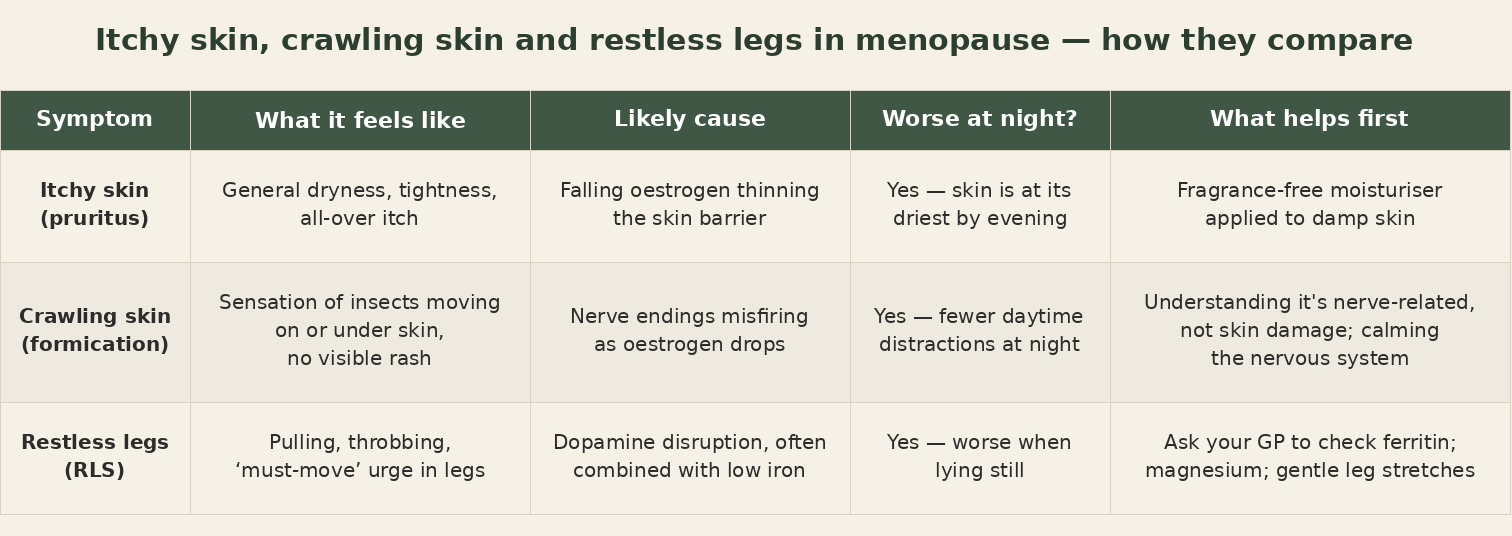
Itchy Skin, Formication and Restless Legs at a Glance
Itchy skin, crawling sensations and restless legs can feel similar, but they are not the same thing and may have different causes. This comparison can help you describe what you're experiencing and decide what to do next.↑
What Helps Itchy Skin During Menopause?
The best approach depends on what's causing the itching. If dry skin is contributing, simple changes to your skin-care routine may help. If the cause is an underlying skin condition, medication reaction or another health problem, you may need different treatment.
1. Moisturise regularly
Use a fragrance-free moisturiser or emollient regularly, particularly after bathing while your skin is still slightly damp.
Choose products that feel comfortable on your skin and avoid anything that appears to make the itching worse. A pharmacist can help you choose a suitable product.
2. Make bathing gentler
Try these practical adjustments:
Use lukewarm water rather than very hot water.
Keep showers and baths relatively short.
Choose gentle, fragrance-free cleansers.
Pat your skin dry instead of rubbing it.
Apply moisturiser afterwards.
3. Reduce potential irritants
If your skin is sensitive, consider:
Using fragrance-free laundry products.
Wearing loose, breathable fabrics.
Avoiding rough or irritating materials against the skin.
Noticing whether a particular soap, lotion or other product triggers symptoms.
You don't need to replace every product at once. Start with the most likely irritants and observe whether anything changes.
4. Keep your sleeping environment comfortable
If itching is worse at night, try lighter bedding, breathable sleepwear and a comfortably cool bedroom.
A cool, damp cloth may help settle an itchy area. Try patting or gently pressing the skin instead of scratching, which can further irritate it.
5. Eat a balanced diet, but be cautious with supplements
A varied diet helps support general health and provides nutrients needed for normal skin function. Include a range of foods such as vegetables, fruit, whole grains, pulses, nuts, seeds and sources of protein.
However, there is no single food or supplement proven to resolve menopausal itching. Supplements such as omega-3 or magnesium should not be treated as a substitute for identifying the cause of persistent symptoms.
If you suspect a nutrient deficiency, ask your healthcare professional whether assessment or testing is appropriate.
6. Ask about suitable treatments
A pharmacist or doctor can advise whether a treatment such as an emollient, cooling product or medicine is appropriate for your symptoms.
Antihistamines help with some causes of itching, but they do not work for every type. Some antihistamines can also aggravate restless legs, so mention both symptoms when asking for advice.
If itching is persistent, widespread, severe or affecting your sleep, arrange a medical assessment rather than relying on self-care alone.
7. Discuss menopause treatment if other symptoms are present
If itching occurs alongside other troublesome menopause symptoms, you may wish to discuss your options with your GP or a menopause specialist.
Hormone replacement therapy (HRT/MHT) can help some menopause symptoms, but it is not a guaranteed treatment for itchy skin, crawling sensations or restless legs. Whether it is appropriate depends on your circumstances, symptoms, medical history and preferences.
FAQs
Is itchy skin a symptom of menopause?
Some people experience dry or itchy skin during or after menopause. However, itching can have many causes, including dry skin, eczema, irritation, medication reactions and other health conditions. Persistent or severe itching should be assessed rather than automatically attributed to hormones.
What does crawling skin during menopause feel like?
Formication is the term for a sensation that feels like insects crawling on or under the skin when nothing is there. It can have several causes. If the sensation is new, persistent or accompanied by other symptoms, speak to a healthcare professional.
Why is my itching worse at night?
Warmth, dry skin and the increased awareness of sensations when you're lying still may contribute. Night-time itching can also have other causes, so seek advice if it is severe, persistent or affecting your sleep.
Can itchy skin and restless legs be connected?
They can occur together, but they are not the same condition and do not necessarily share a cause. Restless legs syndrome typically involves an urge to move the legs, often with uncomfortable sensations that worsen during rest and at night.
Does crawling skin mean I have nerve damage?
Not necessarily. Crawling sensations can have several causes, and the sensation alone cannot establish whether there is a nerve problem. Seek medical advice if it persists, worsens or occurs with other neurological symptoms.
How long does menopausal itchy skin last?
There is no single timeline. It depends on the cause and whether it responds to measures such as moisturising or treatment for an underlying condition. If symptoms persist or keep returning, seek medical advice.
Will HRT stop itching or restless legs?
HRT can help some menopause symptoms, but it is not guaranteed to resolve itching, crawling sensations or restless legs. Discuss your symptoms and treatment options with your GP or menopause specialist.
How can I tell if my itching is caused by menopause or an allergy?
You may not be able to tell from symptoms alone. Allergies and skin conditions can cause itching, sometimes with redness, swelling or a rash, but itching can also occur without obvious skin changes. A pharmacist or GP can help you assess possible causes.
Should I take iron or magnesium for restless legs?
Do not start iron supplements without appropriate advice, as excess iron can be harmful. If restless legs symptoms persist, a GP may consider checking your iron status and discussing suitable treatment. Evidence for magnesium supplements as a treatment for restless legs is limited, so seek advice before relying on supplements.
When to Seek Medical Advice
Although dry skin may improve with simple skin-care measures, persistent itching should not automatically be attributed to menopause.
Contact your doctor if:
The itching is severe, widespread or keeps returning.
It is affecting your sleep or daily life.
You have a new rash, swelling, blistering or other concerning skin changes.
It does not improve with self-care.
You have other unexplained symptoms alongside the itching.
A doctor may examine your skin, review your medicines and consider whether tests are needed to look for other causes.
Seek urgent medical advice if itching occurs alongside jaundice (yellowing of the skin or eyes), or if you develop symptoms suggesting a severe allergic reaction.
If restless legs are regularly disrupting your sleep or affecting your wellbeing, speak to your doctor as well. Assessment can help identify contributing factors, including iron deficiency or medicines that may worsen symptoms.
What to Do Next
Itchy skin, crawling sensations and restless legs can all make sleep more difficult, but they don't necessarily have the same cause. Start by noticing exactly what you're experiencing, trying appropriate skin-care measures and seeking medical advice if symptoms persist or interfere with daily life.
If night-time waking is becoming a pattern, download the free 3AM Wake-Up Guide for practical guidance on understanding and managing disrupted sleep during menopause.
If you're experiencing several menopause-related changes and want a clearer understanding of what's happening and where to start, explore Menopause Essentials.
Want help working out your next steps?
If you're unsure what support would be most useful for you, you can book a free 30-minute Menopause Clarity Call. It's an opportunity to talk through what you're experiencing, ask questions and explore whether working together would be a good fit.
You can also find out more about menopause coaching and how personalised support can help you make sense of your symptoms, develop realistic strategies and build habits that work for your life.
And remember: you don't have to assume that every new symptom is hormonal. Getting the right explanation is an important part of finding the right support.
References
National Institute for Health and Care Excellence (2015, updated 2024) Menopause: identification and management. NICE guideline NG23. Available at: https://www.nice.org.uk/guidance/ng23 .
British Menopause Society (2024) Menopause: identification and management- from guideline to practice. Available at: https://thebms.org.uk/ .
Thornton, M.J. (2013) ‘Estrogens and aging skin’, Dermatoendocrinology, 5(2), pp. 264–270. doi:10.4161/derm.23872. PMID: 24194966.
Verdier-Sévrain, S. (2007) ‘Effect of estrogens on skin aging and the potential role of selective estrogen receptor modulators’, Climacteric, 10(4), pp. 289–297. doi:10.1080/13697137.007016930. PMID: 17653955.
Elias, P.M. (2008) ‘Skin barrier function’, Current Allergy and Asthma Reports, 8(4), pp. 299–305. doi:10.1007/s11882-008-0048-0. PMID: 18606081.
Rimoin, L.P., Kwatra, S.G. and Yosipovitch, G. (2013) ‘Female-specific pruritus from childhood to postmenopause: clinical features, hormonal factors, and treatment considerations’, Dermatologic Therapy, 26(2), pp. 157–167. doi:10.1111/dth.12034.
Lodén, M. (2003) ‘Role of topical emollients and moisturizers in the treatment of dry skin barrier disorders’, American Journal of Clinical Dermatology, 4(11), pp. 771–788. doi:10.2165/00128071-200304110-00005. PMID: 14572299.
Yosipovitch, G., Xiong, G.L., Haus, E. et al. (1998) ‘Time-dependent variations of the skin barrier function in humans: transepidermal water loss, stratum corneum hydration, skin surface pH, and skin temperature’, Journal of Investigative Dermatology, 110(1), pp. 20–23. doi:10.1046/j.1523-1747.1998.00293.x. PMID: 9424081.
Okamoto-Mizuno, K. and Mizuno, K. (2012) ‘Effects of thermal environment on sleep and circadian rhythm’, Journal of Physiological Anthropology, 31, 14. doi:10.1186/1880-6805-31-14. PMID: 22738673.
Allen, R.P., Picchietti, D.L., Auerbach, M. et al. (2018) ‘Evidence-based and consensus-based clinical practice recommendations for the diagnosis and treatment of restless legs syndrome/Willis–Ekbom disease in adults and children: an IRLSSG consensus statement’, Sleep Medicine, 41, pp. 27–44. PMID: 29425576.
National Institute for Health and Care Excellence (2018) Restless legs syndrome. NICE Clinical Knowledge Summary. Available at: https://cks.nice.org.uk/topics/restless-legs-syndrome/ .
National Institute for Health and Care Excellence (2018) Otitis externa. NICE Clinical Knowledge Summary. Available at: https://cks.nice.org.uk/topics/otitis-externa/ .
Only include if you discuss ear symptoms; otherwise remove.NHS (2024) Itchy skin. Available at: https://www.nhs.uk/conditions/itchy-skin/ .
NHS (2024) Menopause. Available at: https://www.nhs.uk/conditions/menopause/ .
Medicines and Healthcare products Regulatory Agency (2024) Herbal medicines: safety and regulation. Available at: https://www.gov.uk/
