

Menopause Weight Gain:
Why Your Body Changes and What Actually Works
It's not a personal failure. It's not laziness or lack of discipline. It's a direct result of hormonal changes that shift how your body stores fat, manages hunger, and processes energy.
Even if coaching isn't right for you, you'll leave with clarity.
The Menopause Action Gap™
Understanding why this happens doesn't automatically tell you how to manage it.
You might read about protein, strength training, and stable blood sugar. But implementing all three simultaneously - while managing reduced energy, work stress, and everything else you're carrying - is where most women get stuck.
Understanding the metabolic shift
Why weight changes in menopause
-
Fat storage shifts
Fat moves from hips and thighs to the belly (visceral fat), which affects insulin sensitivity and inflammation
-
Metabolism slows
Resting metabolic rate decreases by approximately 2–8% during the menopause transition.
-
Insulin sensitivity changes
Lower oestrogen reduces insulin sensitivity, increasing hunger and cravings - especially for refined carbs.
-
Muscle mass declines
Women typically lose 3–5% of muscle per decade after 30. Less muscle means a lower metabolic rate.
"Slower metabolism + increased hunger + reduced muscle mass + fat redistribution = weight gain that feels impossible to manage with the strategies that used to work."
This is why "eat less, move more" often fails in menopause.
Adequate protein
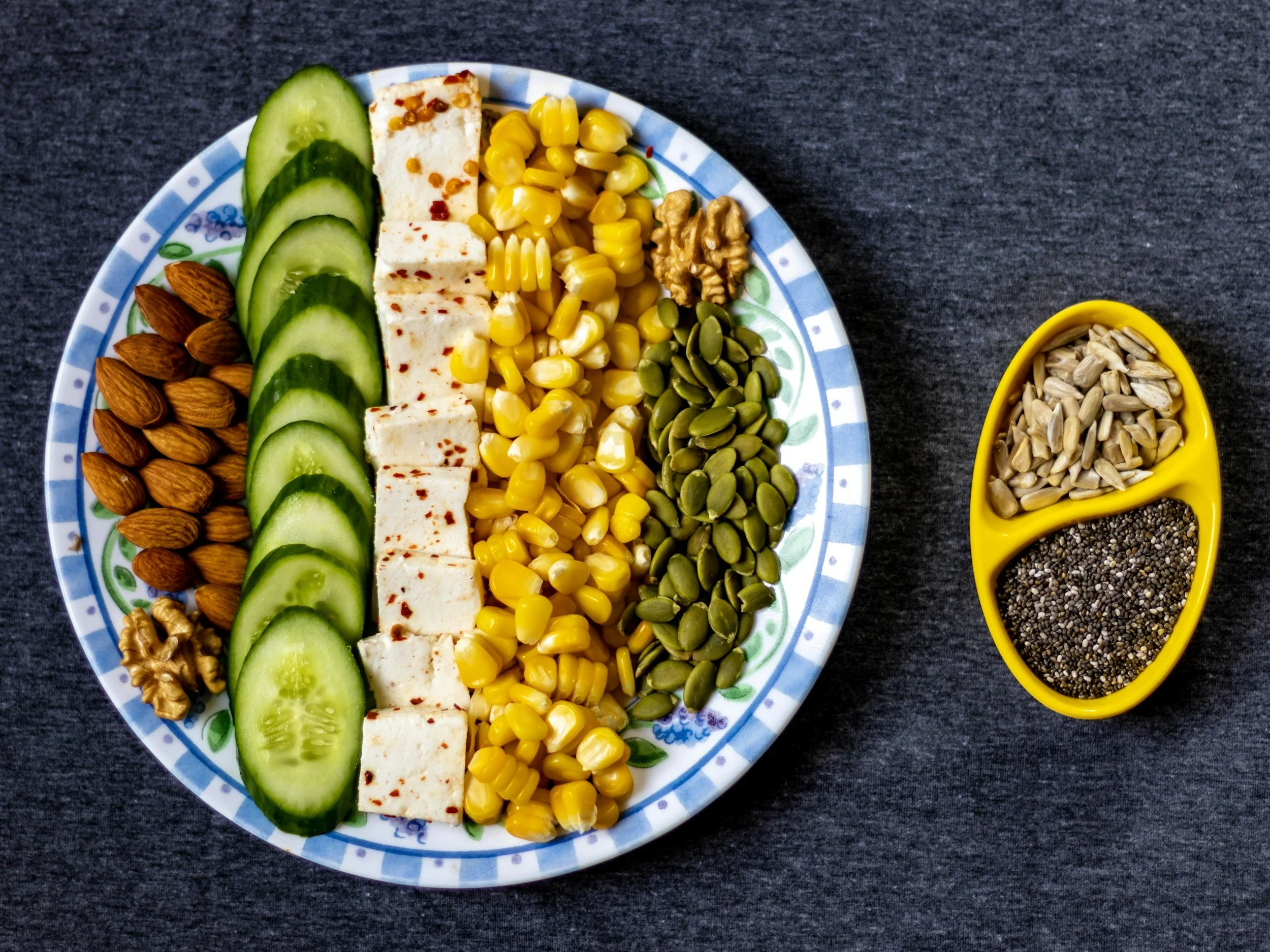
Protein is your most important tool in menopause. It preserves muscle, improves satiety, supports stable blood sugar and protects bone health as oestrogen declines.
What to aim for
1.2–1.6g per kilogram of body weight daily (approx. 84–112g for a 70kg woman)
Spread protein across meals and snacks - don't leave it all to dinner
Sources: fish, eggs, poultry, Greek yoghurt, cottage cheese, legumes, nuts, seeds

Strength training
The single most powerful tool for managing weight and metabolic health in menopause. It preserves muscle, improves insulin sensitivity, supports bone density, and reduces visceral fat.
What to aim for
2–3 sessions per week targeting all major muscle groups
No gym needed - bodyweight exercises, resistance bands, or dumbbells all work
Combine with regular movement: walking, cycling, swimming

Stable blood sugar
When blood sugar crashes, your body triggers hunger and cravings - usually for sugar or refined carbs. Breaking this cycle is foundational to managing weight and energy.
What to aim for
Include protein with every meal and snack
Pair carbohydrates with healthy fats and protein - never eat carbs alone
Finish eating 3 hours before bed to regulate blood sugar overnight

Nutrient-dense whole foods
The Mediterranean approach is particularly effective in menopause - it supports stable blood sugar, reduces inflammation, and provides the nutrients your body needs without restriction.
What to focus on
Abundant vegetables, fruits, whole grains, legumes, nuts and seeds
Olive oil as your primary fat; moderate fish and poultry
Limited red meat; herbs and spices for flavour over salt
GLP-1 medications in menopause
If you're considering or using GLP-1 medications (Ozempic, Mounjaro, Wegovy), there are specific considerations when combined with menopause
What GLP-1s can do
Reduce hunger signals
Improve blood sugar control
Support significant weight loss
Reduce cravings
What to watch for
Muscle loss risk if protein is low
Nutrient deficiency from reduced intake
Appetite and weight return on stopping
Discuss interactions with your GP
Your menopause weight management strategy
-
1. Prioritise protein: aim for 1.2–1.6g per kg body weight daily
-
2. Strength train: 2–3 sessions per week, all major muscle groups
-
3. Stabilise blood sugar: protein + complex carbs + healthy fats at each meal
-
4. Move consistently: combine strength training with regular movement
-
5. Eat nutrient-dense whole foods: vegetables, fruits, whole grains, legumes, fish
-
6. Prioritise sleep: everything depends on sleep quality
-
7. Manage stress: stress intensifies cravings and weight gain directly
The MHC Method™
Closing the Menopause Action Gap™
Weight management in menopause isn't about calorie counting or willpower. It's about metabolic stability - and building habits that actually fit your real life.
1
Connect metabolism, appetite and energy
2
Stabilise through protein, movement and blood sugar
3
Build habits that fit real life - not more overwhelm
Ready to move from understanding to action?
Book a free 30-minute Menopause Clarity Call. We'll discuss what's shifted for you metabolically, what you've already tried, and create a personalised roadmap using the MHC Method™.
Even if we decide coaching isn't right for you, you'll leave with clarity.
FAQs
-
Menopause weight gain is driven by a combination of hormonal changes, ageing, muscle loss, sleep disruption and increased stress. Declining oestrogen can affect where fat is stored, how hungry you feel, insulin sensitivity and body composition - particularly increasing fat storage around the abdomen. Many women notice that the strategies that worked in their 30s and 40s no longer work in the same way during menopause. https://pubmed.ncbi.nlm.nih.gov/28953212/
-
As oestrogen declines, fat storage patterns often shift from the hips and thighs toward the abdomen. This increase in visceral fat is linked to hormonal changes, insulin sensitivity and changes in muscle mass during menopause. It’s a biological response & not a lack of willpower.
-
Metabolism naturally changes with age, partly because muscle mass gradually declines over time. However, research suggests menopause may accelerate some metabolic changes due to falling oestrogen levels, including reduced insulin sensitivity, changes in muscle metabolism and shifts in body composition. This is why many women notice weight changes during menopause even when their habits have not changed significantly. https://pubmed.ncbi.nlm.nih.gov/28953212/
-
The most effective approach is usually one that supports blood sugar stability, muscle preservation and long-term consistency rather than restriction. Many women benefit from a Mediterranean-style approach that includes adequate protein, fibre-rich carbohydrates, healthy fats and minimally processed foods. Extreme dieting often increases stress, hunger and muscle loss, making weight management harder long term.
-
Yes. Strength training is one of the most effective tools for supporting metabolic health during menopause. It helps preserve muscle mass, improve insulin sensitivity, support bone density and reduce visceral fat. You do not need intense gym workouts - resistance bands, bodyweight exercises and dumbbells can all be effective when done consistently.
-
Yes. Hormonal changes, blood sugar fluctuations, poor sleep and stress can all increase cravings during menopause - particularly for sugar and refined carbohydrates. Lower oestrogen can also affect insulin sensitivity and appetite regulation, making cravings feel more intense than before. Stabilising blood sugar through protein, fibre and regular meals can help reduce this cycle. https://pubmed.ncbi.nlm.nih.gov/28953212/
-
GLP-1 medications such as Mounjaro and Wegovy can still be effective during menopause, particularly for reducing appetite and improving blood sugar control. However, menopause increases the importance of preserving muscle mass, supporting bone health and maintaining adequate nutrition while using these medications. Protein intake and strength training become especially important during weight loss.
-
Yes. Sustainable menopause weight management is usually built around muscle preservation, blood sugar stability, adequate protein, regular movement, sleep and stress management - not severe calorie restriction. Extreme dieting may increase fatigue, cravings and muscle loss, making long-term progress harder to maintain. The goal is metabolic stability rather than perfection.